
Aramid sleeve selection starts with the fiber family and the conditions surrounding the textile. Aramids are aromatic polyamides. Meta-aramid and para-aramid are two aramid groups with different structures and properties. Identifying the material group helps a technical buyer connect the sleeve enquiry to the mechanical task and service environment.
For an application involving sunlight or moisture, include those conditions alongside the handling and thermal requirements. This gives the material discussion a defined use context and gives sample evaluation an exposure profile that resembles the intended service.
Identify the aramid material family
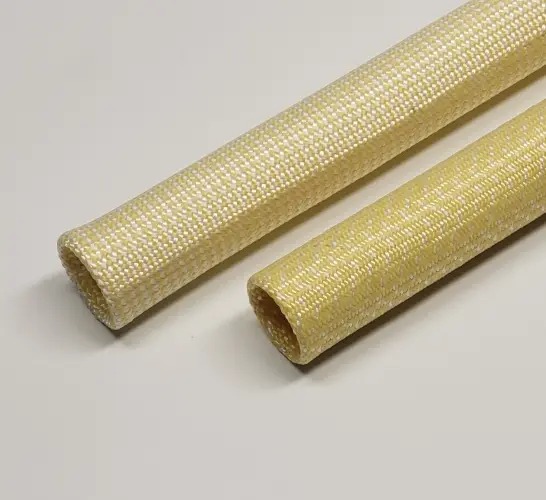
The term aramid identifies a material family with distinct fiber groups. A buyer specifying a sleeve can request the material group, grade and textile construction associated with the proposed configuration. These details establish what is being evaluated and keep samples aligned with the enquiry.
For example, a project may prioritize strength during handling, a flexible covering form or a particular thermal duty. Stating that task first helps the supplier discuss the relevant material characteristics. Record any blend or finish as part of the proposed construction so the material description remains specific.
For an aramid sleeve enquiry, share the required sleeve form and the task it must serve. This gives Bonsing a defined material and construction question to review.
Connect fiber structure to the task
Para-aramid fibers have a high degree of crystallinity associated with high strength. That material characteristic is relevant when the buyer is considering mechanical demands on a textile. The finished sleeve also has a construction, dimensions, yarn arrangement and end condition that shape its behavior in the assembly.
Describe the actual mechanical task in the enquiry. A component that is pulled during installation presents a different evaluation from a covering handled intermittently during maintenance. State where the textile is gripped, how it is supported and which part of the finished assembly carries load.
An identified sample lets the buyer observe handling in the requested sleeve form. Retain its material and construction reference so observations can be associated with the candidate configuration.
Include sunlight in the exposure profile
Prolonged UV exposure can affect aramid fiber performance and color. An exposure description therefore benefits from more detail than an outdoor-use label. Include the expected sunlight duration, storage location and whether the sleeve remains exposed after assembly.
A covering stored under shelter and handled outdoors during installation has a different exposure history from one left in direct sunlight through service. Describing that sequence helps the buyer set relevant conditioning and inspection requirements.
Where the design calls for an added protective finish or an outer covering, identify it as a requested configuration feature. Discuss the assembled arrangement with the supplier and evaluate the candidate under the buyer’s environmental procedure.
Include moisture in handling and use
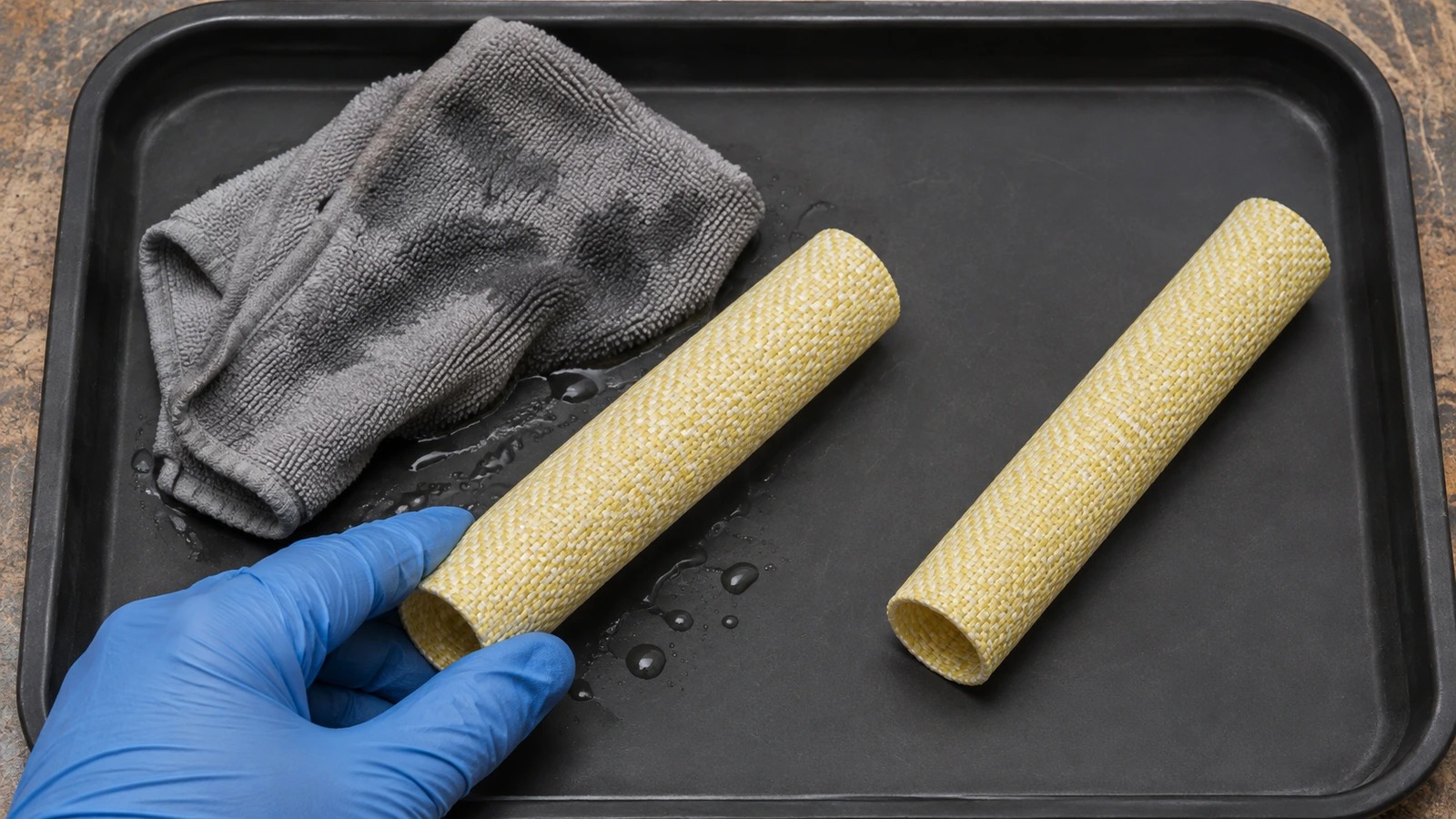
Aramid fibers are porous and can absorb moisture. A sleeve used around a wet component or stored in a damp environment can therefore enter handling or evaluation in a different material condition from a dry sample.
Describe liquid contact, drying opportunities, storage conditions and any wet-to-dry cycling. Identify the liquids involved when chemical contact matters to the application. These details give the supplier a concrete environment to consider for the proposed grade, construction and finish.
Keep the condition of a sample consistent with the purpose of the trial. Record whether it was evaluated dry, wet or after the project’s specified conditioning. This makes comparisons between candidate samples easier to interpret.
Evaluate the requested sleeve configuration
Bring the fiber identity, textile construction and environmental conditions together in one sample request. The buyer’s evaluation can then observe the handling or mechanical task after the relevant sunlight and moisture conditioning.
Record the sample identity, conditioning procedure and acceptance criteria. If the required environment changes during development, carry the changed conditions into a customised material or sleeve configuration discussion with Bonsing. The useful review concerns the actual textile and service sequence being proposed.
FAQ
Does aramid identify a single fiber group?
Aramids include meta-aramid and para-aramid groups with different structures and properties. Request the group, grade and textile construction of the proposed sleeve.
How should sunlight be described in an aramid sleeve enquiry?
Include exposure duration, storage conditions and whether the sleeve stays exposed in service. Prolonged UV exposure can affect fiber performance and color, so the exposure sequence belongs in the evaluation.
How does moisture enter material selection?
Aramid fibers can absorb moisture. Describe wetting, drying, storage and any conditioning used for the sample so its evaluated condition reflects the project.
Discuss an aramid sleeve configuration
Review the aramid-fiber sleeve information. Share the mechanical task, required sleeve form, fiber preference, sunlight duration, wet and dry conditions and any requested finish. Discuss an aramid sleeve configuration with Bonsing to define a candidate material and representative evaluation.
Post time: Nov-27-2026