
SPANDOFLEX is an expandable and abrasion-protection sleeve family for wire and cable harnesses. At a harness preparation station, the cut end is the part the operator handles before the covering reaches its final position. The family offers hot-blade cutting or a special antifray coating for cut-end fraying. Choose the prepared-end requirement alongside the actual construction and assembly sequence.
A useful end finish keeps sleeve preparation connected to the next operation: opening the braid, introducing the harness or connector and moving the covering into position. The choice belongs to the product configuration and production task, rather than a single cutting instruction applied to every braided material.
Why the cut end matters during assembly
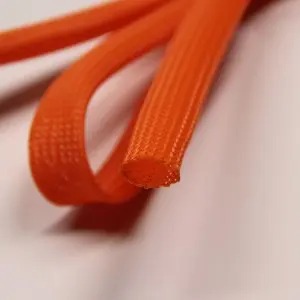
An expandable braid changes shape as the operator handles its opening. The end therefore matters before the sleeve reaches the finished harness: loose filaments at that point can complicate insertion or leave an inconsistent opening for the next operator.
Start with the handled part. If the next operation introduces a bulky connector, assess the prepared end as it opens around that connector. If the sleeve is placed on an unconnected bundle, assess the end through the actual feeding and positioning sequence. The same studio view of a finished sleeve does not show all of those handling conditions.
The practical objective is a prepared end that remains suitable for the defined assembly operation. This gives production and purchasing a shared requirement without claiming a universal abrasion result or service-life benefit.
Hot-blade cutting and antifray coating
The two family options address the cut-end task through different preparation routes. Hot-blade cutting makes the cutting method part of the production plan. A special antifray coating makes the requested finish part of the configuration discussion. Ask Bonsing which option applies to the construction you intend to purchase.
| Preparation route | Decision to make | Information to retain |
|---|---|---|
| Hot-blade cutting | Where the sleeve will be cut and which process will be evaluated | Exact construction, equipment, cut-end condition and subsequent handling |
| Special antifray coating | Whether this finish is available for the selected configuration | Required prepared-end condition and assembly operation |
The SPANDOFLEX range includes different product-specific polymer constructions. A cutting setup accepted for one construction should therefore remain attached to that construction. Evaluate a change in sleeve material or preparation method before carrying the same process into production; no universal blade-temperature setting is implied by the family options.
Put end finish beside supply format
SPANDOFLEX can be supplied in bulk, on reels or in predefined lengths. Each format changes where preparation occurs. A reel-fed station places length cutting within the buyer’s operation; predefined lengths move the length requirement into the order discussion.
For reel supply, agree who cuts the sleeve, how the end is handled between cutting and assembly, and which condition the next station should receive. For predefined lengths, define the required length and finish explicitly. Ordering cut lengths alone does not describe every cut-end property.
This is a practical handoff decision. The buyer can compare formats by the work needed at its own station, while retaining the same required end condition. Supply format and end finish should be separate, visible entries on the preparation plan.
Evaluate the prepared end through the next operation
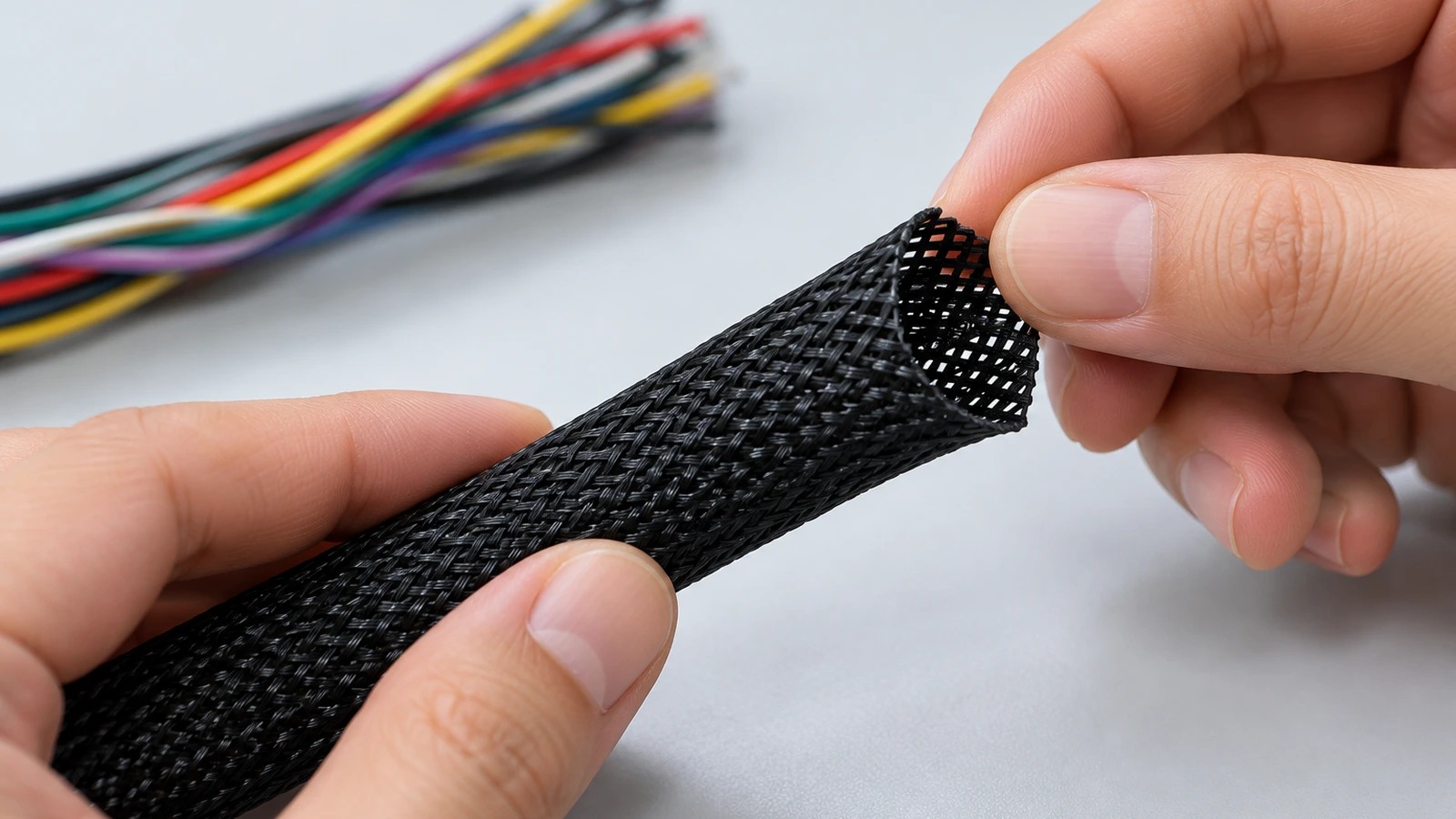
Use a representative piece of the selected construction and carry it through the actual sequence. Inspect it after cutting or receiving, after opening for insertion and after positioning. Include a storage or handling step if pieces wait between preparation and assembly.
Check whether the opening can be handled as intended, whether loose filaments affect the operation and whether the resulting end condition meets the buyer’s agreed acceptance requirement. Record the sleeve configuration and preparation method with the outcome so a future change can be compared against the same task.
Where an unusual connector or handling sequence creates a different end requirement, discuss a customised configuration or solution with Bonsing. Send the relevant geometry and preparation sequence so the discussion starts with the actual assembly obstacle.
FAQ
Does every SPANDOFLEX construction use the same hot-blade setting?
No universal setting is specified for the family. Evaluate the selected construction and cutting equipment together before using a production setting.
How do reels differ from predefined lengths for end preparation?
Reels place length cutting in the buyer’s workflow. Predefined lengths require the buyer to define the ordered length and any required end finish separately.
Is a special antifray coating the same as a hot-blade cutting instruction?
They are different family options. Confirm the applicable configuration and evaluate the prepared end through the intended assembly operation.
Discuss a Cut-End Preparation Plan
Send the selected sleeve construction, supply format, length requirement, current cutting method and next assembly operation. Identify the SPANDOFLEX family options and discuss the prepared-end requirement before finalising the production handoff.
Post time: Oct-15-2026