
Fiberglass knitted tape is a thin textile gasket produced with air-texturized fiberglass filaments. The knitted tape acts as a flexible separation layer between steel frames and glass panels. In an oven or stove door, that layer gives the designer a defined textile interface where the glass meets the metal frame.
A useful selection begins with the glass contact footprint and the frame’s retention arrangement. The strip must sit where separation is required while the complete door accommodates its intended assembly and thermal movement. Thinness and flexibility make this tape form worth evaluating where the available contact land follows the panel edge or face.
Understand the flexible separation layer
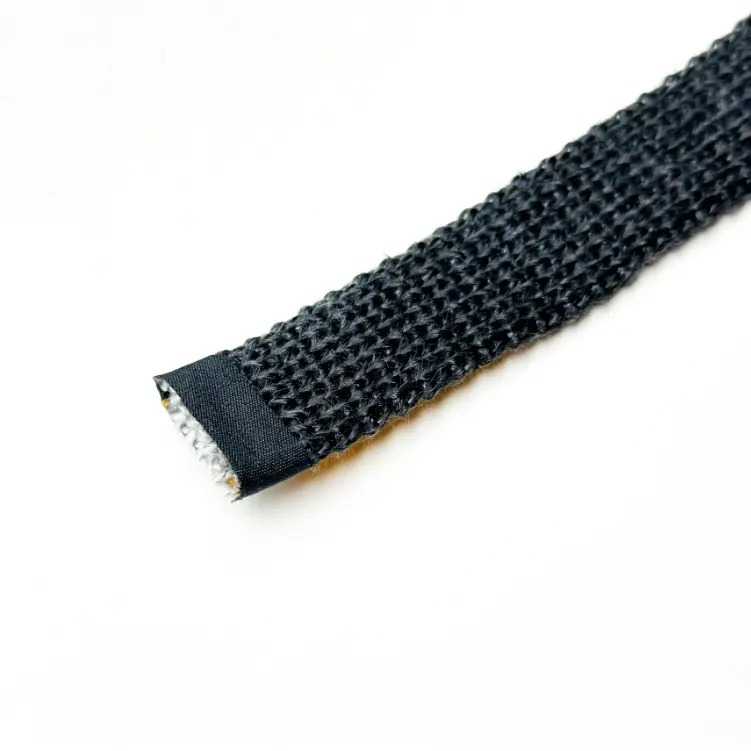
A glass panel and its steel frame meet along a particular contact path. The knitted textile occupies that path as a flexible layer. Its purpose in this arrangement is to provide separation as the frame responds to temperature changes during normal operation.
Identify the surfaces that contact the tape before selecting the strip configuration. A frame may bear against a panel face, an edge region or a combination defined by its design. Showing these surfaces in section makes the separation task understandable to the panel designer, gasket supplier and assembly team.
The product is offered for oven doors, stove doors and grilling closures. For each application, use the actual glass and frame arrangement to define what the tape needs to accommodate.
Follow the glass contact footprint
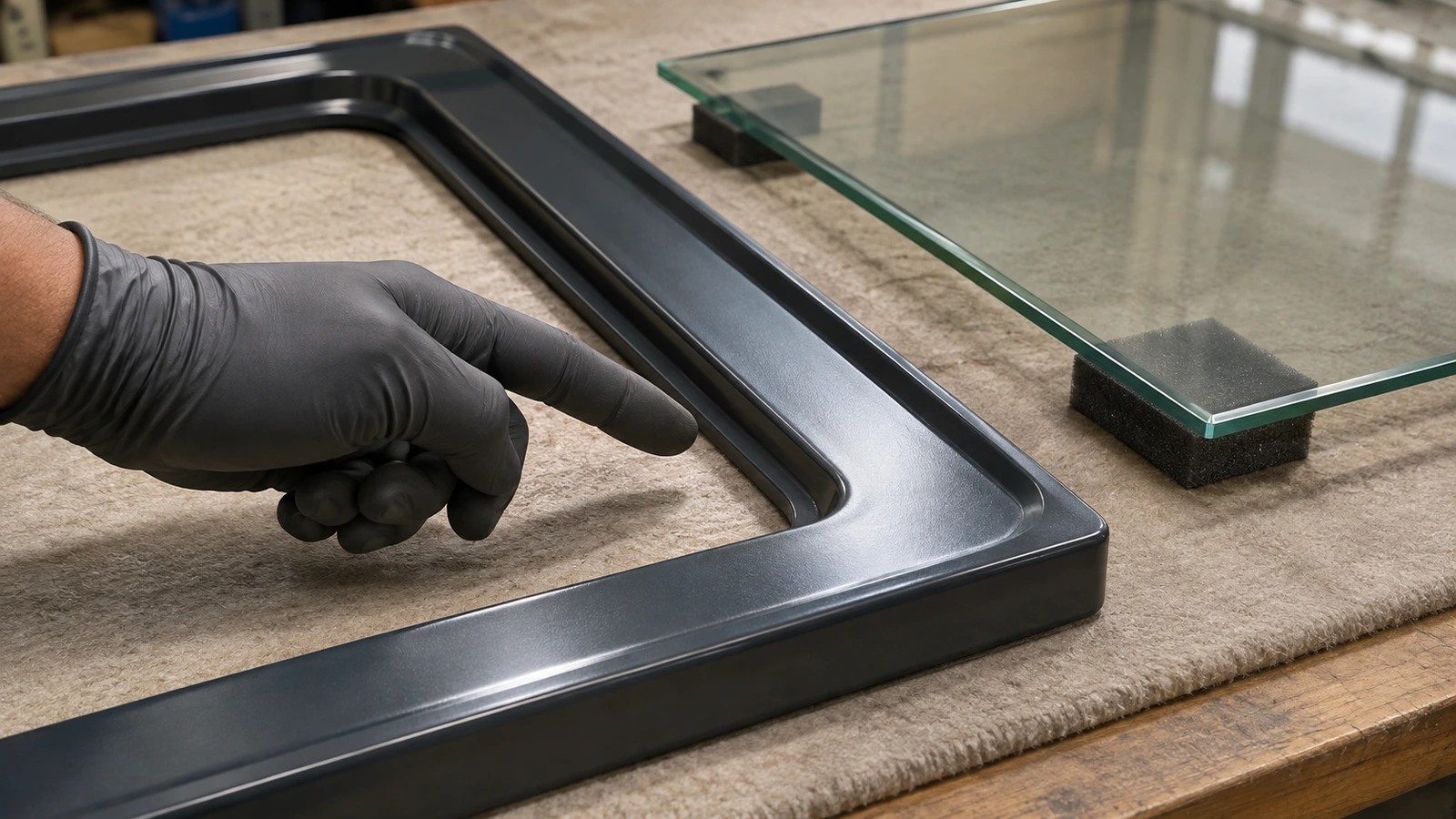
The narrow strip format can follow a specified frame land. Measure the width available for the tape and describe the depth of the assembled interface. Include corners, interruptions and the way neighboring strips meet.
Those details help the supplier discuss a configuration that seats consistently along the intended path. They also help production position the tape without obscuring a fastener or interfering with a panel locator.
An installation sketch should show the following features.
- The glass face or edge that meets the textile.
- The frame land supporting the tape.
- The retainers that locate the glass.
- Corner transitions and any breaks in the contact path.
- The assembled space occupied by the selected tape.
Keep width, thickness and assembly allowance as separate drawing inputs. Evaluate their relationship with the chosen configuration and the glass retention design.
Accommodate the frame movement
The steel frame changes dimensions as its temperature changes. The flexible textile layer is relevant to that moving contact relationship. Give the gasket discussion a clear description of the frame region, temperature cycle and glass constraint.
Review where the panel is located positively and where the design accommodates movement. The equipment designer can then assess how the tape sits within the complete retention arrangement. A local view of the strip alone gives only part of that picture.
If the frame geometry requires a different contact width, profile or material arrangement, share the section and operating conditions with Bonsing for a customised configuration discussion. This keeps the conversation tied to the glass-frame task.
Plan adhesive assisted positioning
Self-adhesive tape is available to facilitate installation onto the frame. This option can help define the strip’s position during assembly when its surface and use conditions are suitable for the selected adhesive arrangement.
Describe the frame substrate, surface finish, preparation process and installation sequence in the enquiry. Confirm how the strip will be held when the panel and its retainers are installed. Specify any adhesive requirement separately so the requested configuration is clear.
On a representative assembly, check that the strip stays on its intended land as the glass is positioned. Follow the equipment’s approved closure and thermal evaluation to observe the completed interface. Record displacement, local bunching or contact changes that require a design review.
FAQ
What does fiberglass knitted tape do between glass and steel?
It provides a thin flexible textile separation layer at the contact between a glass panel and its steel frame, including the frame movement associated with normal heating.
Is an adhesive positioning option available?
Self-adhesive tape is available for installation onto the frame. Provide the substrate, surface preparation and duty so the selected adhesive arrangement can be reviewed.
Which dimensions are useful for a tape configuration enquiry?
Provide the frame land width, assembled interface space, glass contact surfaces and corner details, together with the glass retention arrangement.
Discuss the glass-frame interface
Review the fiberglass knitted tape gasket and share a section through the glass and frame, contact dimensions, corner details, retention method and temperature cycle. Discuss a glass-frame gasket configuration with Bonsing, including adhesive-assisted placement or a customised option where required.
Post time: Nov-25-2026