
Pyroflex silicone-coated fiberglass firesleeve is a thick-walled woven glass-fiber sleeve coated with flame-retardant silicone rubber. It provides a covering around exposed cables and hoses, giving engineers a product to evaluate when a line needs protection from surrounding heat. Pyroflex firesleeve has a stated continuous high-temperature resistance of 260°C. Start selection with the temperature and duration of the exposure that the covering will encounter.
Pyroflex firesleeve has short-duration temperature figures of 1090°C for 15–20 minutes and 1650°C for 15–30 seconds. These pairs serve a different screening question from sustained service: how hot an exceptional exposure becomes, and how long it lasts. Keep the duration attached to each temperature when comparing requirements.
What the sleeve protects
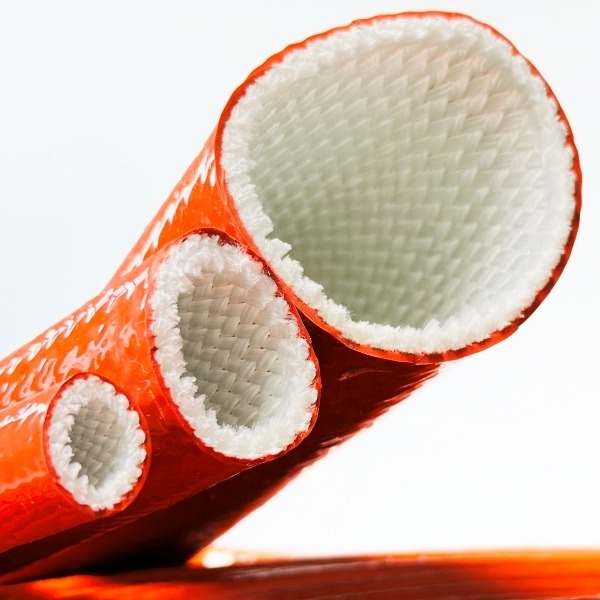
A hose or cable near a heat source brings two sets of requirements into the review: the exposure outside the sleeve and the limits of the enclosed component. The glass-fiber body and silicone coating form the covering around that component. This makes the sleeve relevant to an exposed line segment, rather than a reason to treat every component in the assembly as having the same temperature capability.
Pyroflex firesleeve is installed on cables and hoses and can expand over fittings or joints. For a hydraulic supply line, the sleeve is the external protective layer; the hose, fluid and connection still belong to the line design. Define which part of the route faces the heat so the covering can be considered alongside that assembly. This keeps product selection tied to a real component instead of an isolated high-temperature number.
Read the three temperature and duration pairs
| Exposure category | Pyroflex temperature figure | Associated duration | Selection use |
|---|---|---|---|
| Continuous high-temperature resistance | 260°C | Continuous | First screen for sustained thermal duty |
| Short-duration exposure | 1090°C | 15–20 minutes | Review an exceptional event lasting minutes |
| Short-duration exposure | 1650°C | 15–30 seconds | Review a brief exceptional event |
Product and Specification Reference: Pyroflex silicone-coated fiberglass firesleeve; Bonsing public product-detail page, checked in August 2026. These figures apply to this silicone-coated fiberglass firesleeve. Match the requested configuration and exposure/test conditions with Bonsing before placing them in a project specification.
The table is useful because it separates three very different duty descriptions. A temperature that persists through normal operation belongs in the continuous-duty discussion. An exceptional temperature lasting seconds belongs with its corresponding short-duration information. Selecting the highest number while dropping its duration would change the meaning of the product data.
Separate steady duty from exceptional events
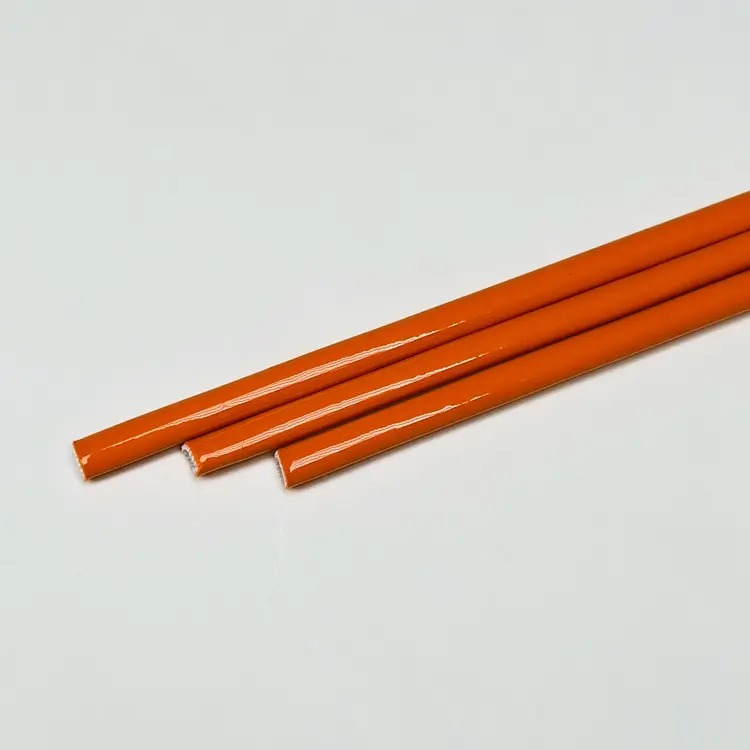
For equipment that operates near a persistent heat source, establish the ordinary exposure first. That gives the engineering team a common starting point for deciding whether this sleeve configuration is worth evaluating. Record warm-up, normal operation and shutdown separately if the line experiences different conditions during each stage.
For a brief hot event, retain both the event duration and the conditions around it. A single event and a repeating cycle are different project requirements, even when their peak temperatures match. If repeated exposure is part of the task, include the interval between events and the number of repetitions in the review. The listed short-duration pairs alone do not establish repeated-cycle performance.
The sleeve figures also describe the sleeve’s resistance, rather than the resulting temperature of the protected hose or cable. Establishing that result requires the actual assembly and exposure arrangement. This distinction helps buyers select the right evaluation instead of assigning a new temperature rating to the enclosed line.
Build an exposure profile
Prepare a short duty profile with the normal exposure, exceptional peak, duration and recurrence. Add the protected component’s own temperature limits and indicate whether the heat comes from surrounding hot conditions, a nearby radiating surface or a possible splash.
Use the profile to agree on an evaluation that represents the intended task. Keep the proposed sleeve configuration, exposure arrangement and component acceptance criteria together in the record. If the profile falls outside the listed screening figures, discuss a customised configuration or solution with Bonsing using those same inputs.
FAQ
Which Pyroflex temperature figure is continuous?
The stated continuous high-temperature resistance is 260°C. The 1090°C and 1650°C figures each have a specific short duration.
Can I use the 1650°C figure for continuous operation?
No. That figure is paired with 15–30 seconds. Continuous selection starts with the 260°C figure and the exact configuration and duty conditions.
Does the sleeve rating give the temperature inside a covered hose?
No. The protected component’s temperature depends on the assembly and exposure arrangement. Evaluate it against the hose or cable’s own acceptance limits.
Request a Thermal Duty Review
Send Bonsing the normal and exceptional exposure profile, event recurrence, protected hose or cable, component limits and required acceptance evidence. Use the Pyroflex product details to identify the sleeve, then request a thermal-duty discussion for the configuration you intend to evaluate.
Post time: Oct-12-2026