
Pyroflex silicone-coated fiberglass firesleeve is a thick-walled woven glass-fiber sleeve coated with flame-retardant silicone rubber. It provides a surrounding thermal covering for a cable or hose. On an electrical cable, that covering serves a different task from the cable’s own insulation: it addresses external heat exposure while the cable construction continues to carry its electrical design requirements.
Pyroflex firesleeve has a stated continuous high-temperature resistance of 260°C. Use that figure for the sleeve’s thermal-covering discussion, then retain the cable’s voltage, conductor-temperature and circuit requirements as separate selection inputs. A useful design identifies what each layer contributes before deciding whether another layer is needed.
Separate the heat covering from the electrical cable
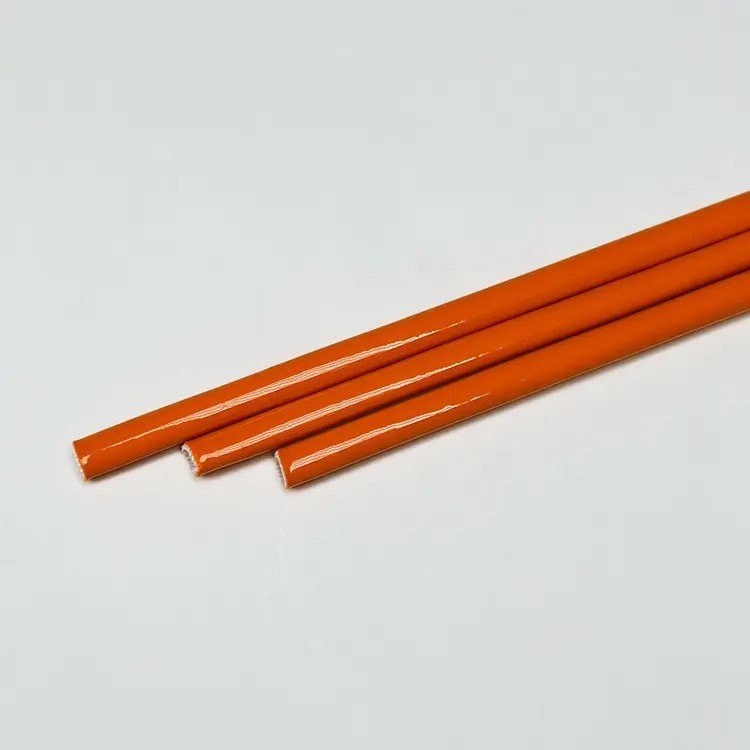
The cable connects the electrical circuit. Its conductor, insulation and any jacket have defined roles within that cable design. A firesleeve surrounds the cable to provide an additional textile covering where heat is part of the exposure.
This separation helps the engineer specify the required function precisely. If an otherwise suitable cable passes through a heat-exposed area, a surrounding thermal covering is a relevant option to evaluate. If the unresolved requirement concerns the cable’s electrical insulation, selecting a thermal sleeve does not settle that requirement. The electrical cable construction must still be selected for its own duty.
What the coated glass-fiber wall contributes
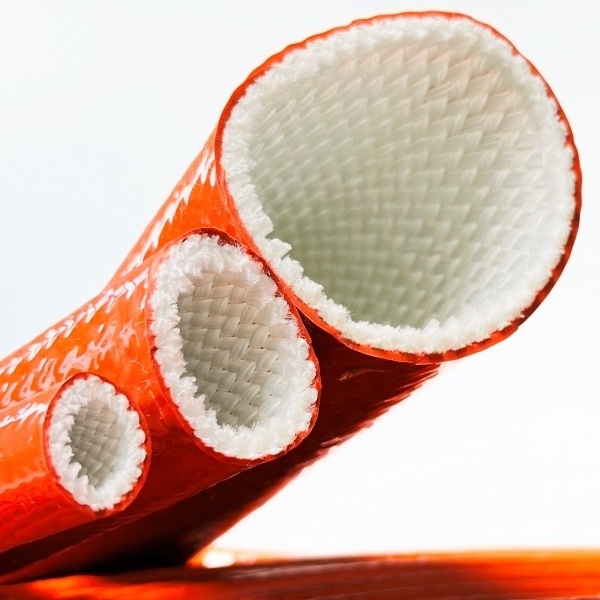
The woven glass-fiber wall forms a hollow surrounding layer, and the silicone rubber forms its coated exterior. This gives the buyer a concrete covering construction to consider rather than an unspecified “protective tube.” Both the outside and the open end help identify the material being discussed.
The covering can be considered around a defined exposed cable segment. Naming that segment lets the design review connect the sleeve to a real heat-covering task while keeping the electrical terminations and the rest of the cable assembly in view. It also makes a later change to the cable route easier to assess: the team can see which covering requirement changes with it.
Keep each cable layer tied to its function
| Item in the arrangement | Function to identify | Selection input to retain |
|---|---|---|
| Electrical conductor and cable insulation | Electrical circuit and insulation requirements | Cable construction and applicable electrical limits |
| Cable jacket, where present | Its specified role within that cable | The cable manufacturer’s construction and application information |
| Pyroflex firesleeve | Surrounding coated glass-fiber thermal covering | Sleeve configuration, exposure and covered segment |
| Termination and equipment entry | Connection and equipment-interface requirements | Connector or entry arrangement and the relevant acceptance requirements |
Keeping these subjects separate avoids attributing every assembly function to the outermost visible layer. In particular, the sleeve temperature figure is not a voltage rating and does not define the permissible conductor temperature of the cable inside it.
Review the covered cable as part of its equipment
Pyroflex firesleeve is installed on cables and hoses and can expand over fittings or joints. This supports considering the textile covering during assembly planning. It does not change the electrical role of a connector or equipment entry.
Review where the covering starts and ends, what remains exposed at the termination and how the covered cable sits among neighbouring parts. Keep any cable support, connector and equipment requirements attached to those components. A surrounding sleeve should enter the design as a specified covering, with its own boundary, rather than as an assumed replacement for the original cable construction.
Evaluate the covered arrangement against the buyer’s thermal and electrical acceptance requirements through the responsible engineering process. The relevant result is the behaviour of that cable arrangement under its defined duty, not a conclusion drawn solely from the sleeve’s appearance or temperature capability.
Choose the next action from the missing function
If the open question is thermal covering, define the exposed segment, heat conditions and proposed sleeve configuration. If the open question is electrical insulation, resolve the cable and circuit requirement with the responsible designer. Where the covering arrangement needs to change, discuss a customised configuration or solution using the actual cable, termination and exposure inputs.
FAQ
Does firesleeve replace electrical cable insulation?
No. Pyroflex is a surrounding thermal covering. The electrical cable retains its own insulation construction and electrical acceptance requirements.
Does the 260°C sleeve figure establish a voltage rating?
No. It concerns the sleeve’s continuous high-temperature resistance. A voltage rating belongs to the specified electrical product and its applicable evaluation.
Can I use the sleeve temperature figure as the conductor-temperature limit?
No. Retain the cable’s own limits and evaluate the covered arrangement under the intended duty. The sleeve figure does not calculate the temperature of the enclosed conductor.
Discuss a Cable Thermal-Covering Requirement
Review the Pyroflex firesleeve construction. Share the cable construction and electrical requirements, heat exposure, covered segment, termination boundary and required acceptance conditions. Discuss a cable thermal-covering requirement with Bonsing to identify the covering task or explore a customised arrangement.
Post time: Nov-02-2026