
Hook-and-Loop Fire Sleeving is a tubular fiberglass-yarn sleeve with fire-resistant hook-and-loop tape on one side. Hook-and-Loop Fire Sleeving opens, wraps around the protected object and closes with its hook-and-loop tape. For a retrofit access assessment, that construction changes the central question from “can the line be threaded?” to “can the technician reach and close the sleeve along the required protection zone?”
Hook-and-Loop Fire Sleeving is intended for installation without disconnecting cables, hoses or pipes. This is especially useful where connectors, fixed pipework or installed hardware make a continuous pass-over sleeve impractical.
Start with access, not a generic product list
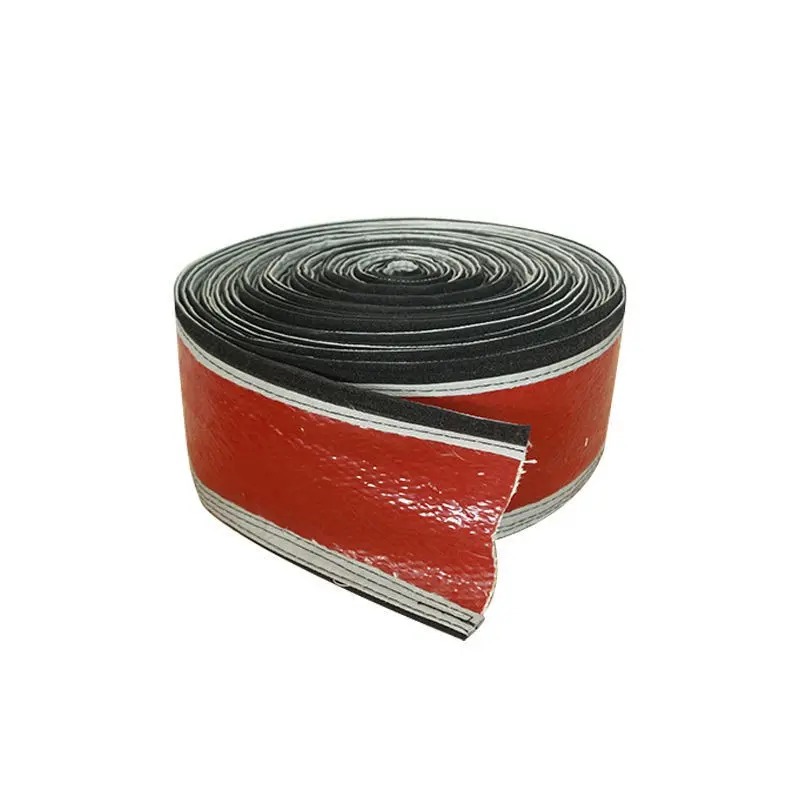
Walk the installed route and mark the length needing protection. Check where the technician can open the sleeve, position it around the line and close the hook-and-loop edge. Include bends, branches, supports, clamps and nearby equipment that may restrict hand access. A short, reachable section can have a very different retrofit path from a long run behind fixed hardware.
What the wrap-around construction adds
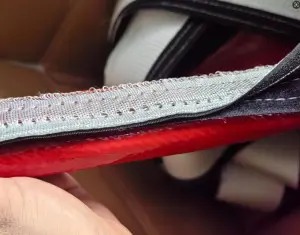
The tubular fiberglass-yarn sleeve body provides the protective form, and the hook-and-loop tape creates a closeable edge. Together, those confirmed features support three practical planning advantages:
- Existing cables, hoses or pipes do not need to be disconnected simply to place the sleeve around them. – The protection zone can be defined against the actual installed route, including points where access begins and ends. – Inspection planning can focus on closure access and routing condition instead of assuming that an end fitting can be removed.
Questions to include in a retrofit review
| Review point | Why it matters | | — | — | | Protected component and outside dimensions | Establishes the object the sleeve must surround. | | Required coverage length | Defines where the wrap begins and ends. | | Bends, joints and clamps | Shows whether the closure line remains accessible. | | Heat source and exposure duration | Connects the access review to the actual protection requirement. | | Inspection or replacement access | Helps plan a workable service sequence. |
If the route includes an unusual shape, restricted access or a condition outside the listed configuration, use those inputs to discuss a customised configuration or tailored solution rather than treating the retrofit as a fixed yes/no decision.
FAQ
Does Hook-and-Loop Fire Sleeving require disconnecting the protected line?
It is intended to wrap around and close on cables, hoses or pipes without disconnecting them.
What information is most useful for a retrofit enquiry?
Share the protected line, outside dimensions, coverage length, access restrictions, bends or clamps, heat source and exposure duration.
Post time: Sep-16-2026