
Hook-and-Loop Fire Sleeving is a tubular fiberglass-yarn sleeve with fire-resistant hook-and-loop tape on one side. For a maintenance team, the opening edge gives access to the protected line while retaining a covering that can be closed again after the task. The hook-and-loop closure allows repeated opening and closing for inspection and replacement of internal lines.
Plan the inspection path as part of the sleeve arrangement. A closure that remains reachable at the actual inspection point is more useful than one that can open in a sample but sits behind a neighbouring line in service. The product’s reopenable construction makes this an access decision as well as a protection decision.
A covering that opens for inspection
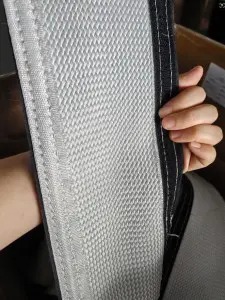
Hook-and-Loop Fire Sleeving opens, wraps around the protected object and closes with its hook-and-loop tape. During maintenance, that construction allows the team to uncover the part of the line needed for inspection and then return the covering to its closed form.
The practical value is the retained opening route. Instead of planning only how to install protection the first time, maintenance can plan how to reach the internal line again. This is relevant when cables, hoses or pipes remain connected but their condition or connections need periodic attention.
The sleeve provides the fiberglass-yarn body and closure edge. The maintenance team provides the inspection procedure, safe access conditions and the line configuration. Reopenability helps organise access; it does not replace the equipment’s isolation or return-to-service procedure.
Define the recurring inspection task
Begin with the inspection itself. Identify what needs to be seen or reached, how much of the line must be uncovered and whether a connection or support restricts that task. Different inspection points may need different opening lengths even within one covered route.
A planned visual inspection may need a clear view along one segment. Replacement of an internal line may need broader access around a connection and enough room to handle the line. Defining the task first avoids treating every opening event as the same operation.
Record the inspection frequency and the expected handling sequence. These are project inputs for evaluating the proposed arrangement, rather than a published number of opening cycles for the sleeve.
Keep the closure reachable
Place closure reach on the access drawing. Show neighbouring lines, brackets and equipment faces that affect how the edge can be opened and closed. The question is whether the actual maintenance position provides room for the task, including the return to the closed state.
Review three access conditions:
- Reach: can the intended opening edge be reached under the approved maintenance conditions?
- Working room: can the needed segment be exposed without the surrounding arrangement obstructing the task?
- Reclosure: can the team see and check the edge after the inspection is complete?
An opening edge facing an inaccessible space may satisfy a first-installation photograph while making repeated inspection awkward. Evaluating the planned maintenance position helps reveal that difference before the layout is accepted. Confirm the required closure engagement and configuration details with Bonsing rather than assigning a universal overlap dimension.
Reclose along the inspected segment
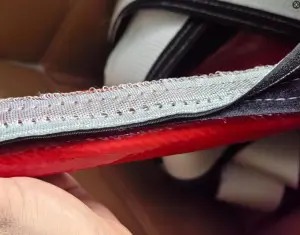
After inspection, follow the covered segment rather than checking only the point where the sleeve was first opened. Review whether the covering has returned to its intended position and whether the closure is engaged along the required length. Include bends and the areas beside supports in the walk-through.
This connects the visible closure construction to a useful maintenance check: the inspected line and its returned covering are reviewed together. A detailed view of the opening edge helps the team identify the part that needs attention after handling.
If an internal line is replaced with a different outside dimension or routing arrangement, revisit the sleeve fit and access plan. The old closure position may no longer describe the new task. For an unusual inspection route or changed configuration, discuss a customised option with Bonsing using the line dimensions and access restrictions.
FAQ
Can Hook-and-Loop Fire Sleeving reopen for later inspection?
Yes. Its hook-and-loop closure allows repeated opening and closing for inspection and replacement of internal lines.
Is access planning finished once the sleeve is installed?
No. Check the recurring inspection position, working room and ability to reclose along the inspected segment.
What changes after an internal line is replaced?
Review the new outside dimensions, route and closure access. Match the sleeve arrangement to the changed line rather than assuming the earlier fit still applies.
Request an Inspection Access Review
Provide the inspection points, opening sequence, line dimensions, adjacent obstructions and photographs of the maintenance position. Identify the Hook-and-Loop Fire Sleeving construction, then request an inspection-access review so Bonsing can discuss a configuration around your repeated maintenance task.
Post time: Oct-14-2026