
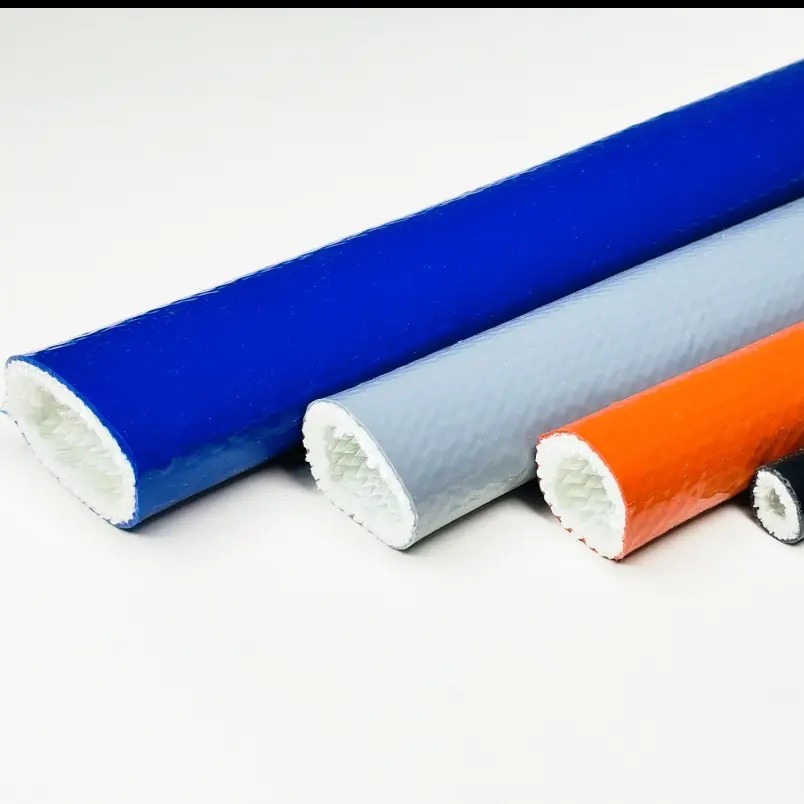
Pyroflex silicone-coated fiberglass firesleeve is a thick-walled woven glass-fiber sleeve coated with flame-retardant silicone rubber. When several hoses run through a hot area, the assembly team can compare individual covered lines with a shared sleeve around a group. The decision depends on the route, separation, branch locations and the way each line will be serviced.
Pyroflex firesleeve has a stated continuous high-temperature resistance of 260°C. Treat that as the sleeve’s stated capability. A shared sleeve does not turn different hoses into one component or replace their individual temperature and service requirements.
Define the lines before grouping them
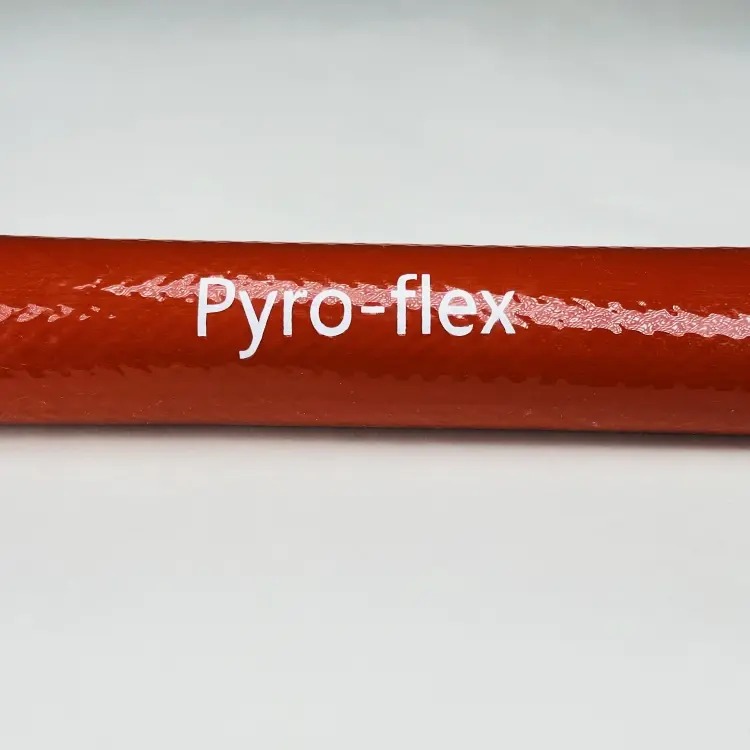
List each hose or cable, its route and the portion requiring a covering. Identify lines that remain together and those that separate before or after the hot area. Pyroflex firesleeve is installed on cables and hoses and can expand over fittings or joints. It is the surrounding covering; the hoses, supports, branch positions and operating limits are supplied by the buyer.
A grouping decision starts with a representative assembly rather than a total count of hoses. A shared covering needs an identifiable bundle envelope and a path that keeps the selected lines together over the intended length. Individual coverings follow each line and let the team describe coverage separately.
Compare coverage and access
| Question | Individual covering | Shared covering |
|---|---|---|
| Lines leave the group at different locations | Define a separate covered segment for each line | Map where each line enters or leaves the shared segment |
| One hose needs replacement | Review access to that line’s own covering | Review access to the group and the effect on neighboring lines |
| Lines have different service conditions | Retain each line’s exposure and limits | Retain those same separate limits within the group |
| Arrangement changes | Revise the affected line’s coverage | Reassess the complete bundle and its envelope |
These are planning differences, not a claim that either arrangement is always faster, safer or thermally superior. Compare the actual candidates with the equipment team’s acceptance procedure.
Map branches and service access
Draw the start and end of the shared portion and mark every branch. A sleeve around the main group does not automatically continue around each departing branch. Note where clamps, sensors or adjacent components limit access, and identify how the team will reach an individual line if its routing or maintenance requirement changes.
If the intended grouping does not match a standard covering arrangement, provide the bundle drawing, branch positions and access requirement to discuss a customised configuration. Keep connector pass-over and final fit as separate checks for the chosen layout.
Evaluate the representative assembly
Record the number and type of lines, the grouped outside envelope, positions through the intended duty and any distinct component limits. Compare the complete assembly in its intended arrangement under the buyer’s normal engineering and acceptance process. Keep each line’s identity in the record so a later replacement or routing change can be reviewed against the original layout.
FAQ
Does one sleeve make every hose in a bundle suitable for the same heat exposure?
No. The sleeve and each enclosed line have their own limits. Review the complete assembly against the actual duty.
Does a shared sleeve automatically cover a branch?
No. Mark where each line leaves the shared portion and define any separate branch coverage required.
When is an individual covering useful to consider?
It can be useful when lines separate, have different coverage limits or need independent access. Confirm the choice on the actual assembly.
Discuss a Hose Covering Arrangement
Review the Pyroflex firesleeve. Share the line types, bundle and branch drawing, exposure, access needs and acceptance conditions. Discuss a hose covering arrangement with Bonsing or request a customised configuration review.
Post time: Nov-17-2026