
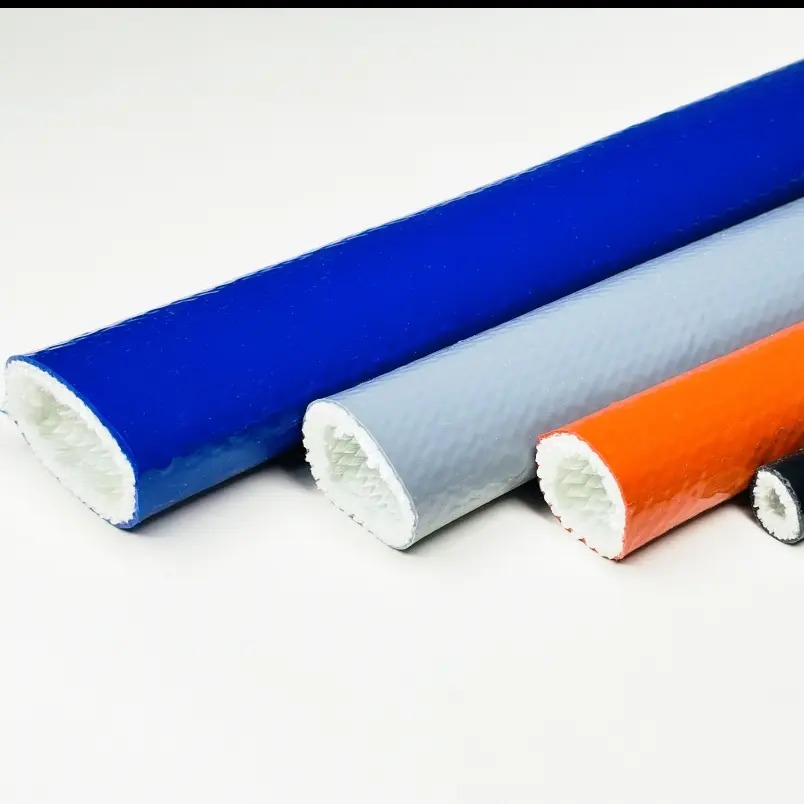
For a Pyroflex firesleeve outside-diameter sizing review, start with the protected cable or hose as it will exist in the assembly—not just its nominal line size. Pyroflex silicone-coated fiberglass firesleeve is a thick-walled woven glass-fiber sleeve coated with flame-retardant silicone rubber. Pyroflex firesleeve is installed on cables and hoses and can expand over fittings or joints, so the largest point the sleeve must pass is often more relevant than the straight-run diameter.
The first decision is whether the sleeve needs to pass over an end fitting, connector, coupling, or joint before the line is installed. That route preserves the advantage of a continuous sleeve around the protected run. Record the largest outside diameter, the length to be covered, and the location of any branches or bends before requesting a configuration review.
Start with the protected route
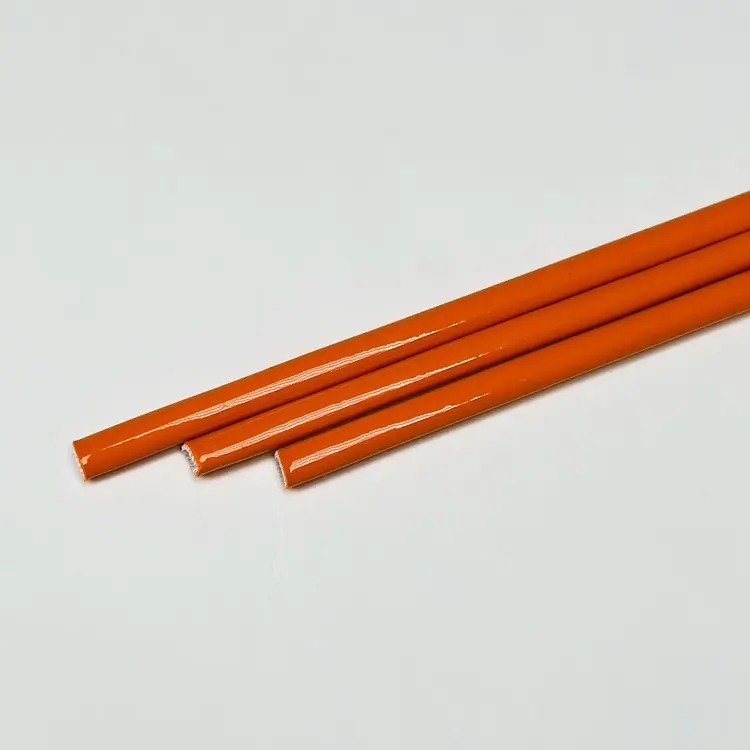
Measure the cable bundle or hose at the point where protection is required, then identify every larger interruption along the installation path. A hose may have a modest straight diameter but a much larger fitting envelope. A cable assembly may have a connector that changes the pass-through requirement. This simple route check prevents selecting a sleeve concept that cannot be installed in the planned sequence.
Pyroflex firesleeve has a stated continuous high-temperature resistance of 260°C. That fact helps establish the thermal-protection discussion, while the final configuration still needs to match the actual heat source, exposure duration, component and installation route.
Three practical checks before an enquiry
1. **Largest pass-through point:** include fittings, joints, connectors and clamps that the sleeve must cross. 2. **Protected length:** mark where protection begins and ends rather than relying on a total line length. 3. **Routing condition:** note bends, movement, nearby surfaces and service access so the proposed arrangement can be reviewed as an installed system.
Why the sleeve construction matters to planning
The woven glass-fiber body and silicone-rubber coating identify Pyroflex as a flexible sleeve, rather than a rigid guard. Its ability to expand over fittings or joints gives assembly teams a useful planning path where the sleeve can be installed before final connection. For a hose or cable run with a known end condition, that can keep the thermal-protection decision tied to the real assembly sequence.
Where a continuous pass-over route is not practical, treat that as a configuration discussion rather than a dead end. Share the access condition, the protected component, the joint geometry and the desired coverage length so Bonsing can discuss a customised configuration or tailored option.
Configuration reference
Pyroflex silicone-coated fiberglass firesleeve is the confirmed product identity. The public product page was verified in August 2026; stated temperature figures and installation language apply to the mapped product and must be reviewed against the requested configuration and project conditions.
Request a configuration review
Send the protected hose or cable type, straight outside diameter, largest fitting or connector diameter, required length, bend/routing details, heat source and exposure duration. This creates a focused basis for a configuration discussion instead of a quote built only on a nominal size.
FAQ
Should I size a firesleeve only from the hose outside diameter?
No. Include the largest fitting, connector or joint that the sleeve must pass over, plus the intended installation sequence.
Can Pyroflex be planned around fittings or joints?
It can expand over fittings or joints. Provide the actual geometry for configuration review.
Post time: Sep-14-2026