
Pyroflex silicone-coated fiberglass firesleeve is a thick-walled woven glass-fiber sleeve coated with flame-retardant silicone rubber. A useful sample evaluation connects this two-layer covering to a real cable or hose assembly: inspect the wall, try the intended handling sequence and record the covering condition that the production team needs to reproduce.
Pyroflex firesleeve is installed on cables and hoses and can expand over fittings or joints. Pyroflex firesleeve has a stated continuous high-temperature resistance of 260°C. These are different reasons to evaluate a candidate: assembly handling can be observed on a representative component, while thermal acceptance needs its own defined conditions and evidence.
What a Pyroflex sample should represent
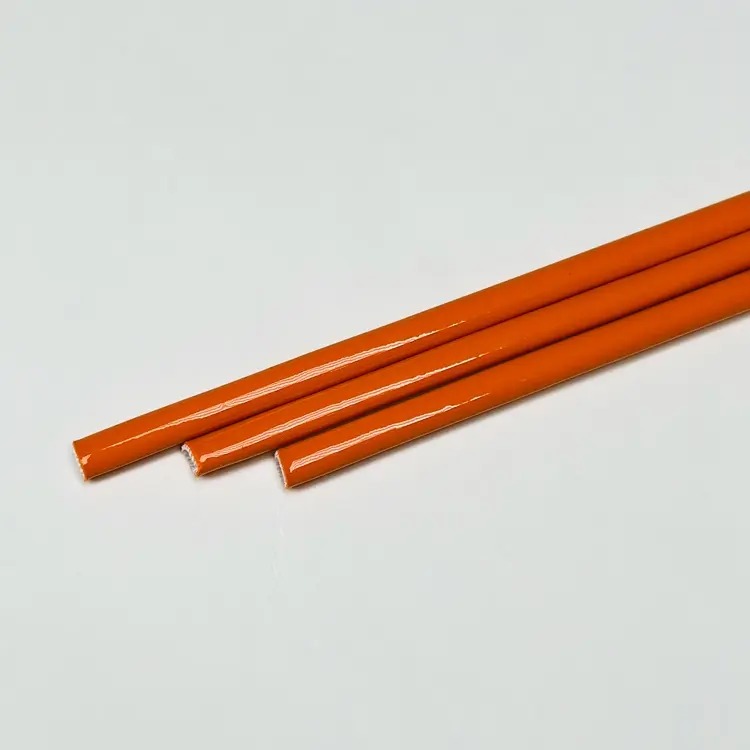
A sample becomes useful when its identity and purpose are clear. A short sleeve piece can reveal the coating, inner textile and end condition. A representative length on the intended line can answer a different question about installation access and handling. Decide which question the trial must settle before requesting material.
Pyroflex firesleeve addresses continuous heat, radiation and splashing around cables and hydraulic, gas and lubricant supply lines. For a physical trial, select the actual component that needs this surrounding covering. A convenient spare hose with a different end assembly may produce an observation that the production team cannot use.
Inspect the wall before trying the assembly
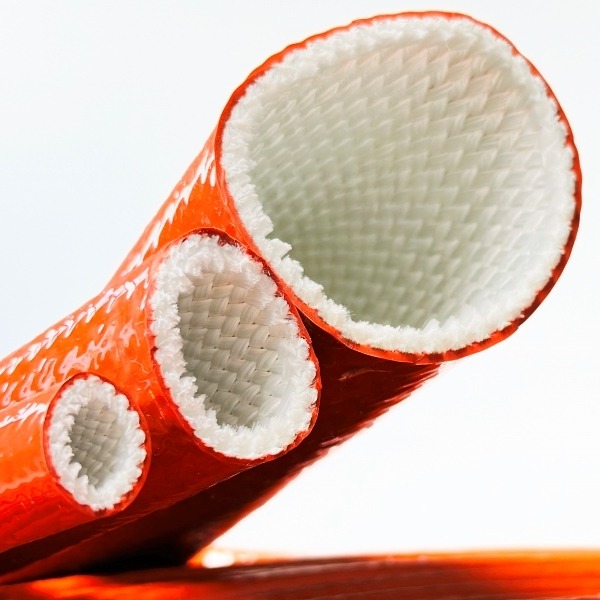
The silicone-coated outside and woven glass-fiber inside make the sleeve more than a smooth coloured tube. View a sleeve end as well as its surface. This establishes what the team is handling and allows the chosen construction to be carried into the later assembly discussion.
Record the received condition before installation. If an opening or coating area looks different afterwards, the team then has a basis for distinguishing an existing condition from something introduced during handling. Agree any acceptance criteria with the relevant engineering team; a photograph alone does not define a permissible defect size.
Turn handling observations into an assembly decision
Run the intended sequence on an unenergised, safely prepared representative assembly using the buyer’s normal procedures. Observe how the flexible covering is presented to the line, moved into place and positioned at each end. The useful outcome is an instruction the assembler can follow, rather than a broad statement that the sample “fits.”
| Observation | Decision it can support |
|---|---|
| Sleeve can be presented to the line at the intended stage | Retain that assembly sequence for further review |
| Access changes after neighbouring parts are fitted | Evaluate an earlier installation step or another covering configuration |
| The final sleeve end falls near a support or transition | Review that local relationship on the assembly drawing |
| Trial component differs from production hardware | Repeat only the affected part of the trial with representative hardware |
Keep the received dimensions, component identity and trial photographs together. This allows a second person to understand why the sequence was accepted or changed. It also prevents a successful trial on one assembly from silently becoming approval for every hose in a family.
Keep a physical fit trial separate from heat qualification
A handling trial answers whether the candidate can be assembled and positioned as intended. Thermal qualification asks how the specified covering and protected component behave under a defined exposure. Keep those decisions distinct so that a useful physical observation is neither discarded nor overextended.
Avoid improvised flame or heat demonstrations. Define any thermal evaluation through the responsible engineering team, using the component’s acceptance limits and the relevant test method. Sleeve temperature capability is not the temperature guaranteed inside a covered hose or cable.
Record the result so the next sample answers a new question
Close the trial with a short decision: retain the candidate, change a named variable, or investigate a specific assembly constraint. Include the sample identifier, representative component and reason. If access or covering geometry remains unsuitable, discuss a customised configuration or solution with the drawing and the exact obstruction, instead of requesting another unspecified sample.
FAQ
What can a loose firesleeve sample establish?
It can establish the visible construction and received condition and help the team plan handling. Assembly positioning requires a representative component; thermal acceptance requires a separate defined evaluation.
Should a fit trial include an improvised flame test?
No. Keep physical handling separate from a controlled thermal evaluation defined by the responsible engineering team and the applicable acceptance requirement.
Does one successful sample trial approve every assembly?
No. Carry the result forward with its sample identity, component and trial conditions. Review a changed fitting, route or protected component before extending the conclusion.
Request a Representative Sample Review
Use the Pyroflex firesleeve construction as the starting point. Send Bonsing the protected component, representative assembly drawing, intended trial question, candidate configuration and quantity. Request a representative sample review to discuss an evaluation scope or a customised covering arrangement.
Post time: Oct-26-2026