
Pyroflex silicone-coated fiberglass firesleeve is a thick-walled woven glass-fiber sleeve coated with flame-retardant silicone rubber. Its coated outer surface and textile wall define the covering being selected. A technical report is useful when the tested specimen, exposure and measured result can be connected to that same requested construction.
Pyroflex firesleeve has a stated continuous high-temperature resistance of 260°C. For a document review, keep the value attached to its duty description and configuration. The buying decision is whether the evidence answers the project’s acceptance question, rather than whether a report contains an impressive temperature.
Begin with the actual sleeve construction
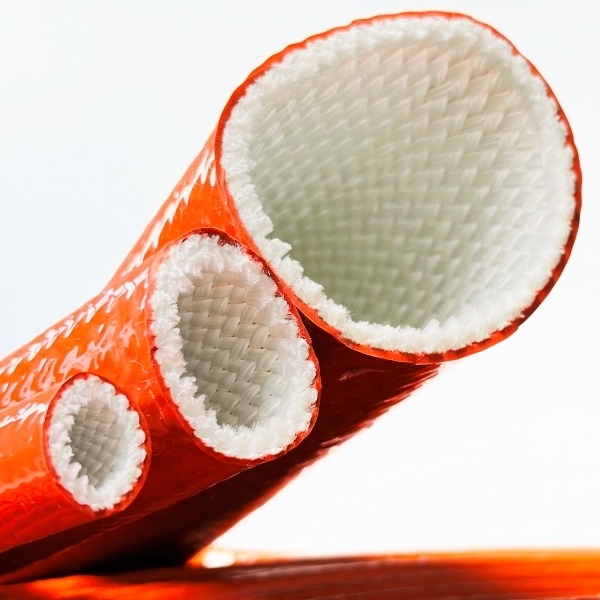
The woven glass-fiber wall and silicone-rubber coating are the starting identity. Match the product name, construction and requested configuration across the enquiry, drawing and any document offered for review. This establishes a common procurement object for engineering and purchasing.
An external colour or printed marking can help recognise a received item, but neither describes every configuration variable. Use the construction and a configuration reference to carry the identity into the document request. If two files use different names, resolve the relationship explicitly before treating them as evidence for the same sleeve.
Match the specimen before comparing a result
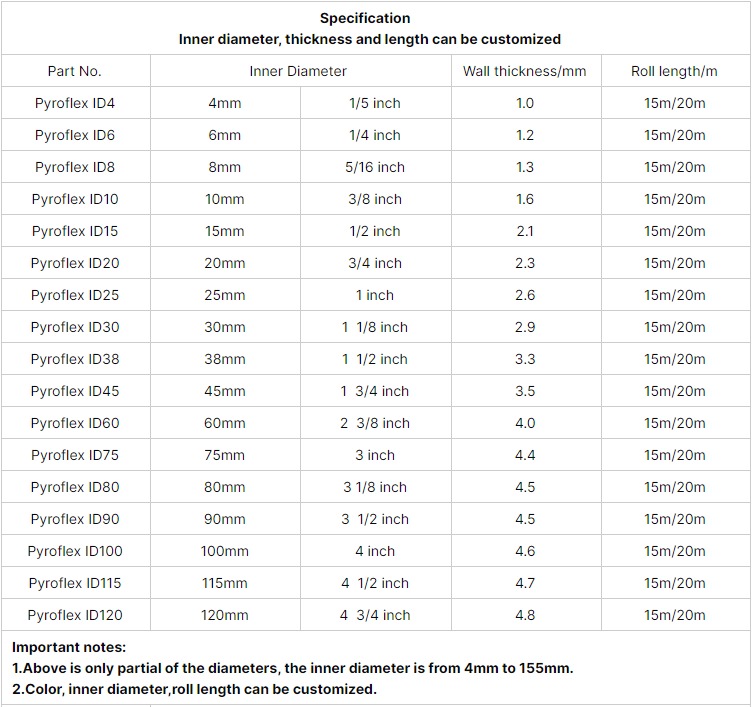
Pyroflex firesleeve is installed on cables and hoses and can expand over fittings or joints. A report specimen might represent a sleeve by itself or a covering on a particular component. That distinction helps the buyer understand what was actually evaluated.
Check the specimen description and its connection to the requested size or construction. When the document identifies a defined sample, retain that identifier in the engineering record. A generic family name without a specimen connection leaves a question for the next technical discussion; it is not a reason to substitute a different product’s result.
| Document detail | Buyer question it should answer |
|---|---|
| Product and construction | Does this identify the coated glass-fiber sleeve being requested? |
| Specimen dimensions or configuration | Which physical item does the result cover? |
| Test arrangement | Was the sleeve alone or part of a particular assembly? |
| Method and exposure conditions | What was applied, for how long and in what arrangement? |
| Measured endpoint | Which observation or measurement led to the conclusion? |
Read the exposure and measured endpoint together
A temperature and a duration describe part of an exposure. The measured endpoint explains what the test was trying to establish. Retaining both avoids turning a material observation into an unrelated claim about a protected component.
For example, a project might care about the behaviour of a covered cable while a document addresses the condition of a sleeve specimen. The report can still inform the discussion, but the engineering team must decide whether another assembly evaluation is needed. This approach preserves the useful evidence and makes the remaining question precise.
Read the method, specimen placement and reported conclusion together. Do not fill missing conditions with assumptions drawn from another report. If a required acceptance clause is named, ask how the result maps to that clause and its relevant edition or project requirement.
Keep a sleeve result and an assembly requirement distinct
The covering surrounds a line; the hose, cable, fitting and supports remain parts of the buyer’s assembly. Their operating limits and acceptance requirements therefore remain part of the project review. Sleeve capability alone does not establish the temperature inside the protected component.
The same separation applies to certificates. A company quality-management certificate concerns its stated management-system scope. A product test report concerns the specimen and conditions it identifies. Request the document that serves the actual decision instead of treating the two as interchangeable.
Build a concise document acceptance decision
Record one of three outcomes: the document answers the requirement for the identified configuration; it is relevant but needs a named clarification; or a different evaluation is needed. Cite the actual specimen and conclusion in the buyer’s own technical record so the decision survives a later purchase-order change.
If the configuration or acceptance requirement changes, reopen only the affected connection. Discuss a customised configuration or solution with the new duty and assembly inputs. The result should be a focused request for clarification or evaluation, without assuming that a particular report or approval is available.
FAQ
What makes a test report relevant to the requested firesleeve?
A clear connection between the product construction, tested specimen, exposure, measured endpoint and the buyer’s acceptance requirement makes it relevant. The engineering review determines whether that connection is sufficient for the project.
Is a company quality certificate the same as a product test report?
No. They address different scopes. Request a product-specific report for a specimen/result question and the appropriate company certificate for a management-system requirement.
What should I do when the tested assembly differs from mine?
Identify the changed component or test condition and ask whether it affects applicability. A further assembly evaluation may be needed; do not extend the result solely because the sleeve name matches.
Request a Configuration Document Review
Start with the Pyroflex firesleeve details. Provide the requested sleeve configuration, acceptance clause, document type, specimen arrangement and intended installation. Request a configuration document review with Bonsing to clarify the evidence needed for that purchase decision.
Post time: Oct-27-2026