
Pyroflex silicone-coated fiberglass firesleeve is a thick-walled woven glass-fiber sleeve coated with flame-retardant silicone rubber. GLASFLEX UT is a braided sleeve made with continuous fiberglass filaments. Comparing these two actual constructions gives a thermal-covering enquiry a clearer starting point than the broad label “fiberglass sleeve.”
Pyroflex firesleeve has a stated continuous high-temperature resistance of 260°C. The construction choice should identify the required wall and exterior first, then review the chosen product against the protected line and exposure. Keep each capability attached to its named product throughout that comparison.
Start with the two actual constructions
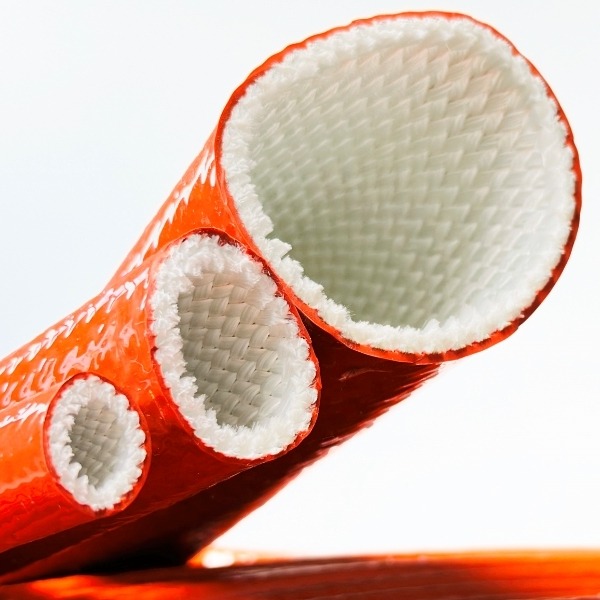
The silicone-coated woven wall identifies Pyroflex as a particular covering option. The coating is part of the product construction, rather than an additional finish the buyer must assume will be applied later. This is useful when the enquiry specifically calls for a silicone-coated glass-fiber sleeve.
GLASFLEX UT provides a continuous-filament glass-fiber braid. Its crossing yarns and open tubular end make the textile construction visible. For a buyer evaluating this braid, that construction is the starting procurement object; specifications should identify it directly instead of relying on a similar colour, product photograph or generic material name.
| Choice to identify | Pyroflex | GLASFLEX UT |
|---|---|---|
| Verified construction | Woven glass-fiber sleeve with flame-retardant silicone-rubber coating | Continuous fiberglass-filament braided sleeve |
| Exterior to specify | The silicone-coated exterior is part of the named construction | Identify the requested braid and any required finish during review |
| Assembly discussion | Cable or hose covering and its installation conditions | Flexible, expandable covering, including rubber-hose applications |
The useful outcome is a shortlist with a clearly named construction. It allows engineering and purchasing to compare the same objects even when both options contain glass fiber.
Choose the required outer surface deliberately
An enquiry for a coated textile should name the coating rather than expecting the supplier to infer it from “heat sleeve.” Pyroflex directly supplies the silicone-coated exterior within its verified construction. This makes the outside layer an explicit part of the comparison.
For the glass-fiber braid, examine the actual candidate and specify the exterior the application needs. Appearance alone does not settle a finish or compatibility requirement. If the project requires a particular liquid resistance, cleaning condition or other surface function, include it in a customised-configuration discussion with the relevant exposure information. Neither a colour nor a material name establishes that result.
Connect the tubular form to the protected line
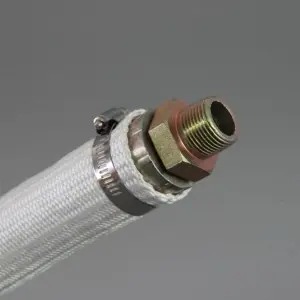
Pyroflex firesleeve is installed on cables and hoses and can expand over fittings or joints. GLASFLEX UT is flexible and expandable and is used around rubber hoses. These facts make both products relevant to a surrounding-covering discussion while leaving the actual line and assembly conditions central to the choice.
Describe what needs covering, where the covering ends and how it reaches its installed position. The selected construction then becomes an input to the assembly review rather than a product chosen independently from the line. A required side-opening arrangement or other changed access condition should lead to a discussion of a suitable configuration, not an assumption that any tubular sleeve can provide it.
Keep thermal numbers within each product scope
GLASFLEX UT has a continuous temperature capability up to 550°C. The Pyroflex continuous figure is 260°C. These entries support initial review of their respective products; they do not, by themselves, create a comparative test of the two coverings on the buyer’s hose or cable.
Product and Specification Reference: Pyroflex silicone-coated fiberglass firesleeve and GLASFLEX UT braided sleeve; Bonsing public product-detail information reviewed in October 2026. The construction and continuous-temperature entries apply separately to the named products. Confirm the requested configuration, exposure and assembly acceptance during technical review.
Keep the protected component’s own limits in the decision. The temperature capability of a surrounding textile does not calculate the temperature of the hose, fluid or cable inside it. Choose an evaluation that answers the assembly question once the construction and duty have been identified.
Make a construction-based shortlist
Retain Pyroflex when the candidate needs to be the named silicone-coated woven glass-fiber construction. Retain GLASFLEX UT when the candidate is the named continuous-filament glass braid and its application scope fits the covering task. Then compare each shortlisted configuration against the same protected-line requirements.
If neither candidate matches the required exterior, access or assembly conditions, describe the changed requirement and discuss a customised configuration or solution. This keeps the next enquiry focused on the missing function rather than requesting an unspecified “better” sleeve.
FAQ
Are Pyroflex and GLASFLEX UT the same construction?
No. Pyroflex has a silicone-coated woven glass-fiber wall. GLASFLEX UT is a continuous-filament fiberglass braided sleeve. Keep the construction named in the enquiry.
Can the higher continuous-temperature figure decide the choice alone?
No. The required construction, exterior, protected component, exposure and assembly acceptance also matter. Each figure belongs to its own named product scope.
Does a sleeve photograph establish liquid compatibility or a special finish?
No. Include the required surface function and exposure in the configuration review instead of inferring it from appearance.
Request a Covering Construction Comparison
Compare the Pyroflex construction with the GLASFLEX braided sleeve. Send the required exterior, protected line, exposure type and duration, route, assembly access and acceptance requirements. Request a covering construction comparison with Bonsing using those common inputs.
Post time: Nov-03-2026