
SPANDOFLEX PET022 is a protective sleeve made of polyethylene terephthalate (PET) monofilament with a diameter of 0.22 mm. Its expandable textile construction gives a wire harness or pipe a surrounding mechanical covering while retaining an open braided wall.
SPANDOFLEX PET022 has an open weave structure that permits drainage. That is useful when a harness covering needs to remain open rather than behave as a continuous sealed jacket. Start by deciding what the covering must do at the installed bundle surface, then compare the sleeve construction and fit.
What the PET022 construction contributes
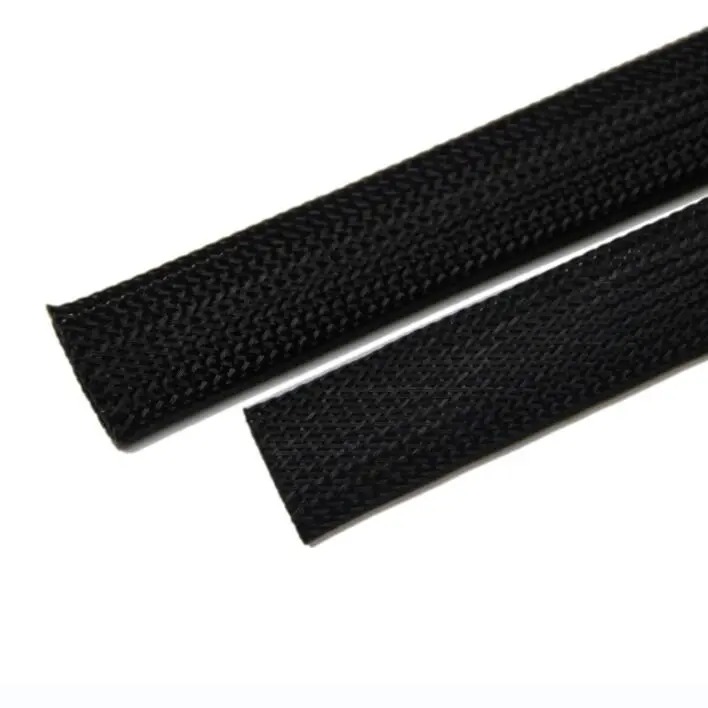
SPANDOFLEX PET022 is designed for the mechanical protection of pipes and wire harnesses. The braid provides a surrounding textile layer between the protected line and its local environment. This makes it a candidate for a harness-covering task where the selected installed shape and contact conditions can be examined directly.
Treat the sleeve as one part of the harness arrangement. The buyer’s wires, supports and surrounding parts define where contact or movement occurs. The practical benefit of identifying those positions is that the braid can be evaluated where the covering is actually needed, instead of judging it only as a loose flat sample.
An open braid leaves a drainage path
The spaces between monofilaments are a visible part of the construction. They allow drainage through the textile wall, which distinguishes the sleeve from a closed barrier covering. This can be a useful selection feature when retained liquid is part of the application discussion.
That same openness means the buyer should assess how much of the bundle remains visible between strands. An open braid is not a waterproof jacket. When the application needs a sealed barrier or another environmental function, discuss a customised configuration or solution with the exposure and acceptance requirements rather than assigning that function to PET022.
Drainage also depends on the installed arrangement. A local low point or an obstruction can matter even when the textile wall is open. Evaluate the whole covered route under the buyer’s procedures; the sleeve feature alone does not define the moisture condition of the complete assembly.
Distinguish filament diameter from sleeve size
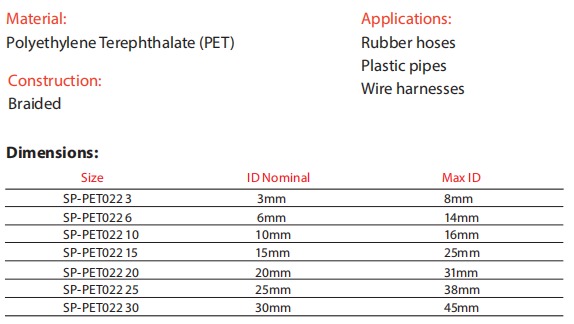
SPANDOFLEX PET022 has a size range of 3 mm to 50 mm. The 0.22 mm monofilament dimension describes the individual PET strand. The sleeve size concerns the surrounding tube. Keeping those two dimensions separate prevents a construction detail from being entered as an inner diameter or wall thickness.
| Dimension or observation | What it describes | How to use it |
|---|---|---|
| 0.22 mm monofilament | Individual PET strand | Identify the PET022 construction |
| 3–50 mm sleeve range | Model-level size offering | Begin a size discussion for the harness |
| Installed covering condition | Braid shape around the actual bundle | Evaluate openness, local contact and handling |
Product and Specification Reference: SPANDOFLEX PET022; public Bonsing product-detail information reviewed in October 2026. The monofilament dimension and size range apply to this model. Confirm the requested size and configuration against the harness geometry during technical review.
Evaluate the braid in its installed shape
SPANDOFLEX PET022 can expand to a maximum usable diameter at least 50% higher than its normal size. Expansion lets the textile accommodate different shapes, but the braid’s visible covering condition changes as its yarn arrangement opens around the bundle.
Examine a representative straight section and the local changes in shape. A flattened loose sleeve, a round bundle and an irregular harness section are different viewing conditions. Comparing them helps the engineer choose a covering condition deliberately without converting the expansion statement into a universal sizing formula.
Keep this observation separate from a quantified abrasion claim. An open weave image can show strand arrangement and coverage; the application’s mechanical acceptance still belongs to the defined assembly evaluation.
Use a representative harness to compare covering conditions
Place the candidate on the intended harness geometry under a safe assembly procedure. Review visible openness, surface contact, local movement and drainage-related positioning. Retain the candidate size and installed photographs so another engineer can understand the comparison.
If the bundle shape or required barrier function changes, take the changed requirement back into the configuration discussion. A clear record of what the covering needs to provide is more useful than requesting a larger sleeve without explaining the mismatch.
FAQ
Does 0.22 mm describe the sleeve inner diameter?
No. It is the diameter of the PET monofilament used in PET022. The model’s sleeve size range is 3–50 mm; select the requested size against the actual harness geometry.
Is open-weave PET022 a waterproof jacket?
No. Its open textile wall permits drainage. A sealed environmental barrier is a different application requirement to discuss separately.
Can the expansion statement replace a trial on the harness?
No. Use it to understand the expandable construction, then review the installed braid shape, openness and contact conditions on representative geometry.
Request a PET022 Application Review
Use the SPANDOFLEX PET022 model details to identify the candidate. Send Bonsing the harness cross-section, desired covering condition, drainage requirement, contact and movement conditions, and candidate size. Request a PET022 application review or discuss a customised solution for a different covering requirement.
Post time: Oct-29-2026