
Bonsing aluminum-foil laminated glassfiber fabric combines a fiberglass fabric with aluminum foil or film on one side. The laminate brings a silver-facing surface and a textile substrate into one material. For a wrap or insulation-jacket design, identify both faces before planning the panel arrangement.
The aluminum-foil laminated glassfiber fabric has a thickness range of 0.15 mm to 3 mm and a width range of 1.0 m to 1.5 m. These are different selection variables: thickness describes the laminate build, while width helps define the sheet layout. Keep both tied to the requested material configuration.
One laminate has two different faces
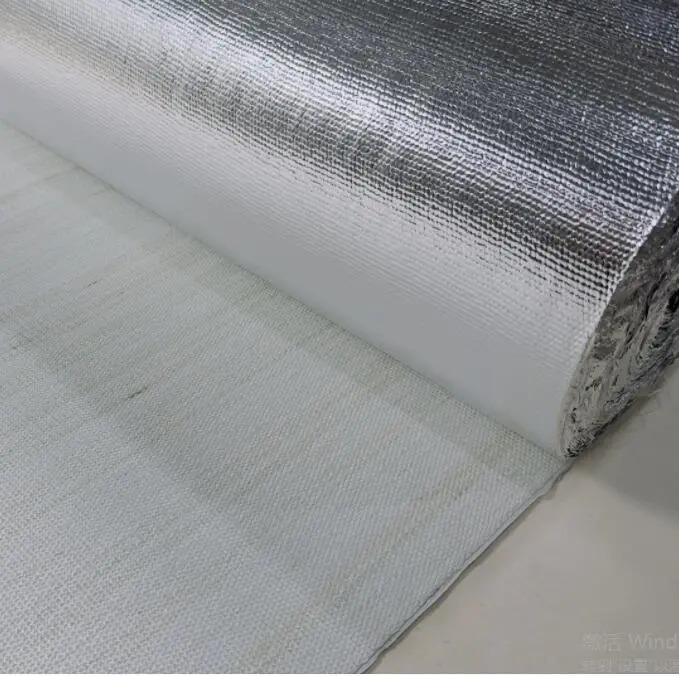
A one-sided laminate gives the designer two surfaces to identify within the assembly. The laminated face and the glassfiber textile backing belong to the same material but occupy different positions when the sheet is laid out. A drawing that shows only a silver rectangle leaves that orientation unclear.
Naming the two faces helps a fabricator retain the intended arrangement when a flat pattern becomes a curved wrap or a multi-panel jacket. It also keeps the material request consistent between the thermal designer and the person preparing the cutting layout.
Identify the silver face and textile backing
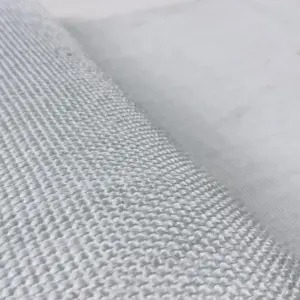
The aluminum-foil laminated glassfiber fabric has a silver surface. Use that recognisable face as an orientation reference, then identify the corresponding textile side on the material sample and drawing. Mark the intended exposure-facing side in the assembly specification rather than asking the fabricator to infer it from an unlabelled photograph.
The visible textile weave contributes a second recognition point. It helps distinguish a laminate with a glassfiber substrate from an unspecified metallic sheet or film. A face view, edge view and substrate detail therefore answer different material-identification questions.
Appearance is useful for identification, but it is not a measured radiant-heat reduction result. If the design depends on a particular reflective behaviour or exposure condition, specify that requirement for technical review. Keep any resulting evaluation tied to the chosen laminate and assembly arrangement.
Use width and thickness for different layout decisions
| Material variable | Available range | Decision it informs |
|---|---|---|
| Laminate thickness | 0.15–3 mm | Requested material build and its place in the covering assembly |
| Fabric width | 1.0–1.5 m | Panel orientation, cutting layout and the positions of material joins |
| Laminated side | One side | Face/backing identification in the assembly drawing |
Product and Specification Reference: Bonsing aluminum-foil laminated glassfiber fabric; public product-detail information reviewed in October 2026. The dimensional ranges apply to this laminate family. Confirm the requested thickness, width and configuration during technical review; the ranges do not define tolerances or every available combination.
Start the layout from the covered geometry and required panel arrangement. Retain the material width alongside the flat pattern so joins are considered deliberately. Where the pattern requires a different width or material build, discuss a customised configuration with the intended geometry rather than assuming that the range endpoints can be combined arbitrarily.
Carry the material into a wrap or jacket design
The aluminum-foil laminated glassfiber fabric is offered for applications including pipe wrapping and thermal insulation jackets. These applications make it useful to treat the laminate as a material input to the covering design.
The buyer’s assembly still defines the overall shape, joins, edges, closures and any additional layers. A rolled laminate is not the same procurement object as a finished jacket. Describing the required deliverable clearly allows the enquiry to distinguish material supply from a separate discussion about a customised covering solution.
Keep the face orientation visible as the layout moves around bends or transitions. A material join and an edge are part of the assembly, not simply more uninterrupted laminate. Their treatment should follow the covering’s actual duty and acceptance requirements.
Confirm the assembled covering against its duty
Evaluate a representative arrangement when the design relies on the behaviour of the completed covering. Retain the laminate configuration, face orientation, joints and exposure conditions with that evaluation. This makes the result useful for the intended assembly instead of extending a material description into an unsupported system claim.
For a changed exposure, closure or geometry, send the changed requirement into a customised-solution discussion. The most useful input is a clear account of what the covering must do, together with its material and layout constraints.
FAQ
Is the laminate the same as a finished insulation jacket?
No. It is a laminated fabric material that can be considered for jacket and wrap applications. Specify the finished assembly, joins and closures separately.
Does the silver appearance establish a heat-reduction percentage?
No. It identifies the visible face. A quantitative result requires the relevant material and assembly evaluation under defined conditions.
Should width and thickness be entered as separate requirements?
Yes. They describe different dimensions and inform different parts of the material and layout review. Confirm the requested combination and its tolerances during the configuration discussion.
Discuss a Laminate and Layout Requirement
Review the aluminum-foil laminated glassfiber fabric. Send the exposure-facing side, backing requirement, sheet layout, requested thickness and width, join arrangement and covering duty. Discuss a laminate and layout requirement with Bonsing for material selection or a customised configuration discussion.
Post time: Nov-05-2026