
A fiberglass knitted soft cord gasket provides a compliant rope body for a door seal path. The soft knitted rope is produced with texturized E-grade fiberglass yarns. The soft knitted rope has a size range of 5 mm to 22 mm. Selection begins with the groove, closed-door gap and available closure travel considered together.
The soft knitted rope is elastic and compressible, with resilience for repeated compression. Those characteristics make it worth evaluating where a door repeatedly brings its mating surface onto a textile gasket. A defined groove and closure arrangement give the buyer a practical way to assess how the cord seats and recovers.
Understand the compressible rope body
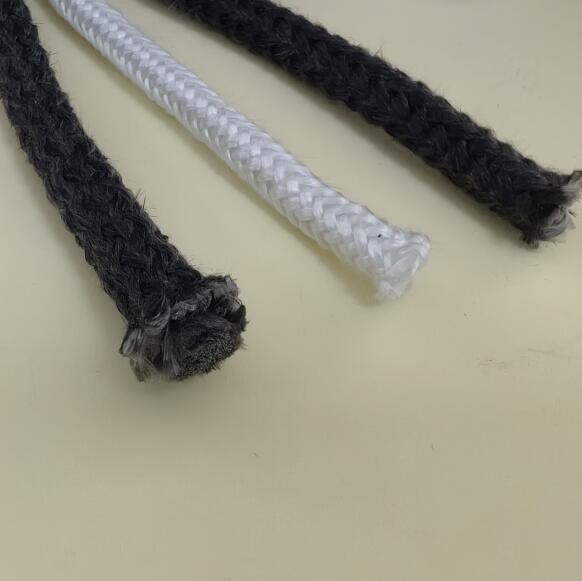
Texturized yarns create a bulky textile structure, and knitting forms that material into a soft rope. The resulting compliant body can be evaluated along the chosen door-seal path, including corners and changes in direction. Its behavior at the joint depends on the selected cord and the surrounding closure geometry.
The soft knitted rope is offered as a gasket for boiler, cook oven, industrial oven and wood stove doors. In these tasks, the designer needs the rope to occupy the intended seal location while allowing the door and latch to reach their defined positions.
Begin with a section through the actual joint. Identify the groove or supporting land, the opposing door surface and the mechanism that sets the final closed position. This relates the rope’s compressibility to a specific assembly task.
Match the groove and closed gap
Cord diameter, groove dimensions and the gap remaining when the door is closed each describe a different part of the joint. Record all three. The rope’s selected cross-section and the space available during closure must be assessed together.
A groove can locate the rope while the opposing surface supplies the closing contact. At corners, the path and available space may change. Showing those transitions helps the supplier discuss a cord configuration that can be evaluated in the real door.
| Assembly input | What it helps the buyer evaluate |
|---|---|
| Groove width and depth | How the cord is seated and located |
| Closed-door gap | Space available at the defined closed position |
| Closure travel and latch action | How the door brings the mating surfaces together |
| Corner path and joint ends | Locations where seating may change |
| Selected cord and core | The textile configuration entering the trial |
Use the 5–22 mm family range to frame the configuration enquiry. Establish the chosen diameter and acceptance conditions with the supplier and equipment designer. A different gap or closure arrangement can be discussed as a customised configuration using the same joint information.
Choose a core for the closure task
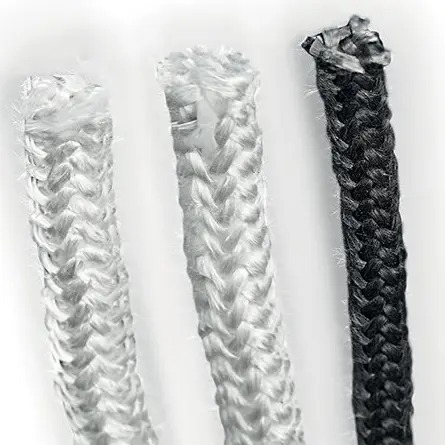
Different core options include fiberglass filaments, ceramic filaments and knitted rope. A core choice belongs to the configuration being evaluated. Identify the requested core alongside the rope size so the sample, quotation and assembly trial refer to the same construction.
For a buyer considering several candidates, keep the door geometry and trial procedure consistent and record the configuration of each candidate. This makes observed seating and recovery easier to associate with the actual sample.
Product and configuration reference
Bonsing fiberglass knitted soft cord product-detail information, reviewed November 2026, covers the 5–22 mm family size range and alternative core constructions. The requested diameter, core and service requirements are subject to configuration review and quotation confirmation.
Observe repeated closing
The rope’s resilience is relevant when the door opens and closes repeatedly. Observe how the selected cord seats as the door approaches its closed position and how it recovers when that contact is released. Include corners, joint ends and areas beside the latch in the inspection.
Follow the equipment’s approved procedure for the representative closing and service evaluation. Record the selected cord, core, door setting, exposure and number of trial cycles. Assess seating, displacement and recovery against the buyer’s acceptance criteria.
When the door requires unusually constrained travel or a particular core response, send the measured joint and the observed behavior to Bonsing. A focused configuration discussion can then address the part of the closure that needs adjustment.
FAQ
Can cord diameter alone determine the required compression fit?
Evaluate the cord diameter together with groove dimensions, the closed-door gap and closure travel. The complete joint defines the space and contact experienced by the selected rope.
Which core options can enter a configuration discussion?
Available options include fiberglass filaments, ceramic filaments and knitted rope. Confirm the core of the requested configuration when arranging a sample or quotation.
What should repeated closing reveal during a trial?
Observe seating, displacement and recovery at the latch region, corners and joint ends, using the equipment’s acceptance procedure and recorded trial conditions.
Request a cord configuration discussion
Review the fiberglass knitted soft cord gasket. Share the groove section, closed gap, closure travel, corner details, preferred core and service duty. Request a cord configuration discussion with Bonsing to define a candidate for your representative door evaluation.
Post time: Nov-26-2026